Wednesday, July 09, 2008

APO Chamber Concert, Bach, Mozart, Hindemith


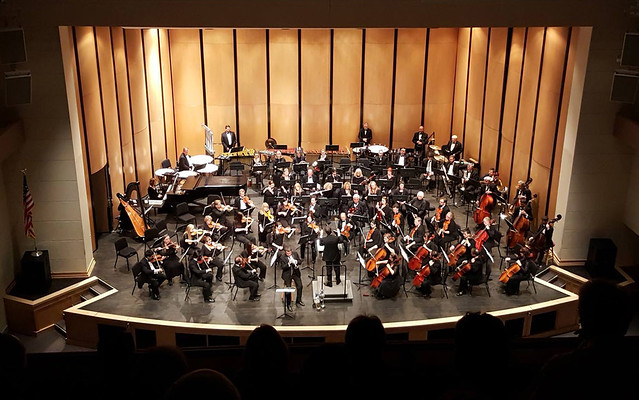
On July 25th and 29th, the APO Chamber Orchestra will be providing two concerts of great classical music. The first concert, on Friday, July 25, at 7:30 PM will be held at UNM's Keller Hall, and will feature David Felberg, conductor and Joel Scott, horn soloist. On the program is Respighi's Ancient Airs and Dances Suite #3, Mozart's Concerto No 3 for Horn, and also his Gran Partita in B flat. This last piece was featured prominently in the movie Amadeus in the scene where Salieri first encounters the adult Mozart. Regarding the horn concerto, Joel is a tremendous horn player who has played with the APO for many years both as an orchestral musician but also in various chamber ensembles. You might have even caught his playing in the NMSO. Don't miss this one!

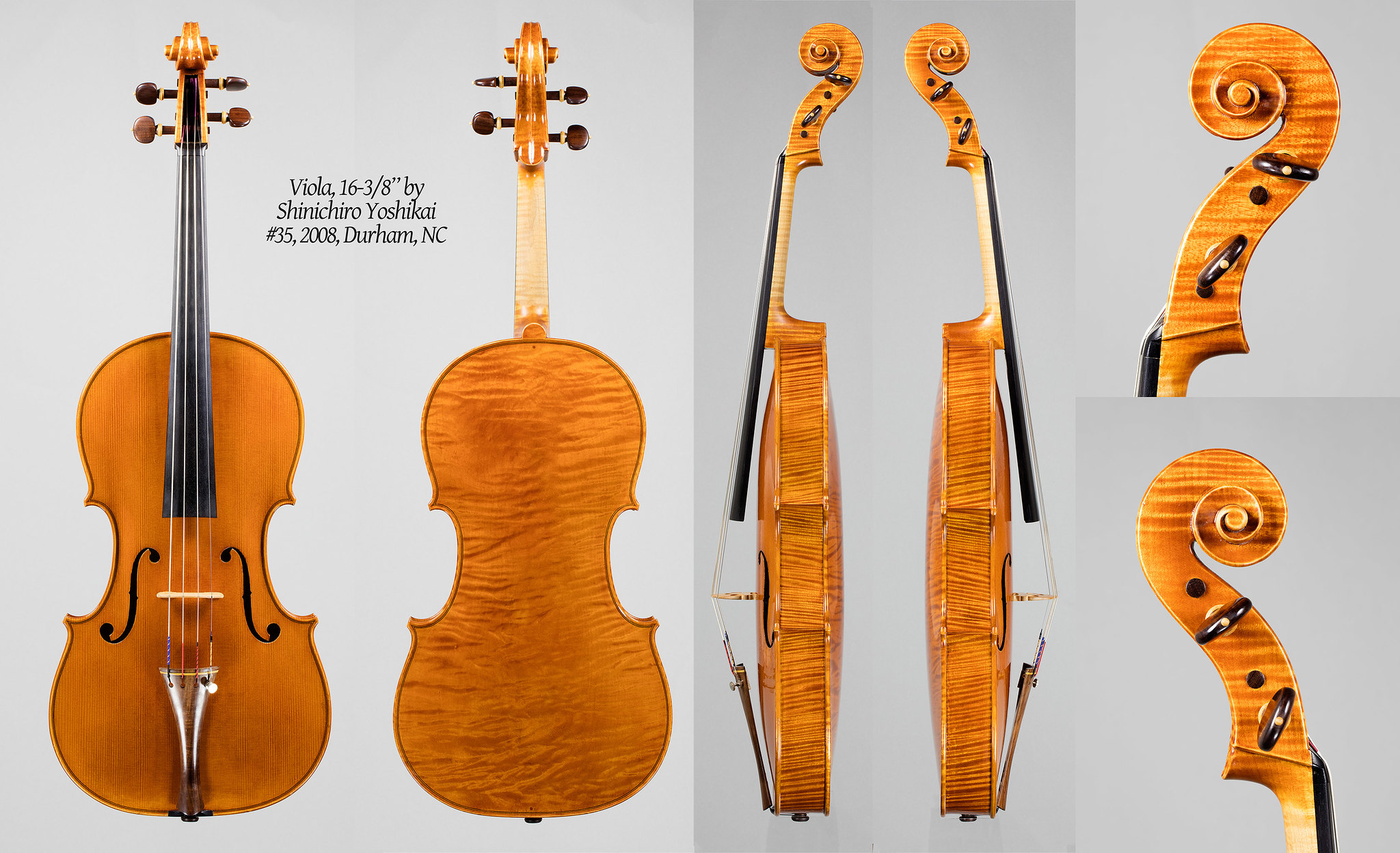
The second concert will be on Sunday, July 27th at 2:00 PM at the African-American Cultural Center on the Expo NM grounds (Fairgrounds)and features David Felberg, conductor, Jacqueline Zander-Wall, mezzo-soprano and Karl Winkler (me), viola. On the program is Bach's Orchestral Suite No. 3 (includes the famous "Air"), Hindemith's Trauermusik for solo viola and Strings, Bach's Brandenburg Concerto No. 3 and his Cantata BWV 170 Vergnugte Ruh, beliebte Seelenlust. This is some great music, especially if you love Bach. The inclusion of the Hindemith is due to the last part being based around a Bach chorale. And for those of you who have already heard Jacqueline Zander-Wall (such as in the Habanera from Carmen at our Opera concert earlier this year) you already know what a great singer she is. For those who have never heard her, you're in for a treat!

Thursday, June 12, 2008

Hypermiling - this is something new?

I've just started catching on to the fact that a new trend is emerging due to the ever-increasing cost of gasoline. Now we're at $4 a gallon and I can't imagine how it will come down any time soon if ever.

So there's this story on ABC News about "hypermilers" - people who, by altering their driving behaviors, are improving the MPG of their cars to above the original EPA ratings for the cars.

I had actually first noticed this some months ago on a forum called Clean MPG. Members there discuss their approaches to improving mileage, and tout their results.

There is a lot of good info in these sources. But what surprised me most was that I had discovered most of these techniques, and even some that they don't mention, independently over the years.

I think it started when I got a used 1996 BMW 328i. One of the features I found most interesting was the "MPG" gauge on the dash board, right under the speedometer. It was easy to see how driving habits would affect this gauge - being stopped would register zero MPH and acceleration would yield low numbers. But cruising along at a constant speed, especially if it was a moderate speed, would yield something like 40MPH, which is pretty good for a 2.8L six-cylinder car putting out 190BPH.

Then, the second feature of that car that I began to learn about was the trip computer. This system would calculate the average speed, MPH, the amount of miles left on the current tank of gas. With these tools, I started to learn how to drive more efficiently. And if anything were wrong with the car, i.e. low tire pressure, bad gas, engine not running right, etc. I could immediately see a reduction in mileage.

Here are the main things I learned to do to get more MPG (some are already mentioned above, some are not):

1. Slow down. Driving too fast, i.e. more than the optimum speed to get the best MPG will definitely eat gas. On the highway, there is not much difference in MPG between 45 and 65 for most cars. But faster than that and wind resistance, and having the engine at higher RPMs begins to cut into efficiency.
2. Accelerate slowly. Gunning the car from a stop - remember physics here - is applying the max energy to get the car moving when it doesn't want to (inertia). Slow careful acceleration is better, although it should be practiced within reason especially if there are cars behind you.
3. Try not to stop, if possible. Stopping and starting rob the most MPG from your car than anything else. Starting (see above) takes a lot of energy, and stopping just turns forward momentum into heat (brakes).
4. Make sure you have good, clean oil in your engine, and the right amount of air pressure in your tires. In fact, you may want to inflate the tires closer to their cold max than you normally would. This decreases rolling resistance.
5. Coast down hills in neutral, especially if you can maintain an appropriate speed for that road. I don't advocate turning off your engine because you will lose power steering, and reduce lubrication to drive train components in some cases.
6. Fill up in the morning, so that your car and the gas is at a lower temperature (slightly more dense). Fill up on the first (slow) notch on the pump.
7. Time the stoplights on your route to figure out if there are relationships between lights - this can often help you arrive at intersections when the lights are green, rather than having to stop every time. I've noticed that here in Albuquerque, every once in a while, the light timings change. Not sure why, but I suspect that city engineers are experimenting with traffic flow based on light timings.
8. Choose routes that have the least stops. This may actually take you farther, but the reduction in consumption by not having to stop and start as many times may outweigh the increased distance. Plus, you won't be wearing out your brakes as quickly, either.
9. Choose routes that have as few left turns as possible. There is a lot less waiting to turn right than waiting to turn left.
10. Always hug the inside of the curve, or take the inner lane around a curve. This means that you actually go less distance since the smaller radius means smaller circumference. Although this does not show as increased MPG, it adds up slightly over time to less actual distance traveled. As with slow acceleration, be careful not to weave in and out of lanes with other cars around.

With these techniques, I've been able to consistently get 30MPG out of a car that is rated 22 city, 29 highway, has 6 cylinders with 225BPH, weighs 3800 lbs, and is a full size, four door sedan. On the round trip to Taos a few weekends ago, I got 34.5 MPG out of a tank of gas. Sure, 40, 50 or more MPG would be better. I bet you can get those kinds of figures out of smaller, 4 cylinder cars with EPA est. 25 city, 35 Hwy ratings. Give it a try!

Thursday, June 05, 2008

Wedding Season!!

We've got quartet and trio engagements to keep us very busy for the next couple of weeks. We're at the Albuquerque Museum of Art, Hotel Albuquerque, up in Cerrillos, and at the Immaculate Conception Church this weekend. Maybe we'll see you at one of these weddings! If so, please say hello.

Thursday, May 22, 2008

Made it Through the Mozart

On Sunday the 18th, our quartet, with Carolyn Anderson on flute, performed the outer two movements of the Mozart Flute Quartet K. 285 in D Major. The APO Chamber Music Concert was quite long (some groups did not adhere to the max time of 10 minutes...) and we were last on the program. The first movement went very well - great tempo, and I think we had some nice musical moments in there. We stuck well together despite not getting a chance to rehearse in the church - and the acoustics there are very wet. The last movement started out great, but rapidly sped up to a tempo that was barely manageable. For my part, I did try to pull the tempo back down a tad when I had 8th notes... but to no avail. My 16th passages were very tough at that tempo and I was not quite on top of it as I would have liked to be. Nevertheless, it was an exciting performance and I think the audience appreciated us, and the other groups as well.

Thursday, May 08, 2008

Concerts tomorrow and Sunday

The last concert series of the APO season is upon us! We had our final dress rehearsal last night, and I must say, there is some good music happening here. The guitar soloist sounds fantastic, and the 2nd movement of the Rodrigo is just gorgeous. Bolero now has a very nice, slow ramp up to the climax along with a super-steady temp. And the Beethoven. What can I say about such a great piece of music? I did not know it very well before we started rehearsing it, and I had never played it before. Now, only the 9th remains as the sole Beethoven Symphony that I have not played. The 3rd is a monumental work and will test everyone's ability to concentrate for 45 minutes! It is a symphonic tour de force, and will challenge the listeners.

Concert #1 - Friday, May 9th at the First United Methodist Church, downtown Albuquerque, at 7:30 PM. This is a great location for a concert, with wonderful acoustics and an excellent visual setting.

Concert #2 - Sunday, May 11th at the Kimo Theater, downtown Albuquerque, at 7:30 PM. Need I say more about the Kimo? It's one of Albuquerque's treasures.

I hope to see you there.

Wednesday, April 23, 2008

Mozart Flute Quartet K. 285

For this year's APO Chamber Music concert, my quartet will be tackling the first movement of the Mozart Quartet for Flute and Strings in D Major K.285. It's a lovely piece with great material for all four of the players. Our group will be made up of Carolyn Anderson on Flute, Catherine Castro on Violin, me on Viola and Richard Strauss on Cello. Carolyn played the Mozart Concerto for Flute and Harp together with Anne Eisfeller of the NMSO during our last season, and it was just terrific! So we're excited about playing some chamber music with her.

The concert starts at 2:00 PM on Sunday, May 18th, and will be held at St. Michael and All Angels Episcopal Church, 601 Montano NW. It's free, so come by for an afternoon of good music with a bunch of different chamber music groups from the APO.

See you there!

Monday, April 21, 2008

Potato Cannon Spug Gun Project (not music related)


A few weeks ago after watching some videos on YouTube, I decided to jump in and make my own potato cannon (often called a spud gun). Basically, these things are low-tech muzzle-loading guns made from PVC or ABS plastic pipe. My first one had a 1-1/2" bore, 4 ft. barrel, and a 3" chamber that was 18" long. I've learned that the "ideal" ratio of chamber to barrel volume is 1.5:1 to maximize muzzle velocity for the projectile (potato). I've also learned that one of the more common fuels, hair spray, is far from ideal. For one thing, it takes more of it to get the appropriate "bang". Also, it smells awful after burning and leaves a sticky residue that can gunk up your gun over time.

A aerosol product that I remembered as being very flammable proved to be much superior to hair spray: Static Guard. The smell after ignition is not great, but it beats hair spray. Others have reported that Axe deodorant also works well. I'm interested to try white gas (pure gasoline used for camping stoves) sprayed from a mister. One common mistake I see a lot on forums, YouTube and elsewhere is the use of too much fuel. It really takes very little, and you need a lot of air for the fuel to properly burn. I spray Static Guard for about a half second - that's all it takes even for a large gun like my second one.

So here's a video of some construction details and also the results...


UPDATE!

I've just learned that the ATF considers suppressors, even on spud guns, ILLEGAL. So I'll be dismantling mine...